

Corporate culture: definition, characteristics and importance for business success
Corporate culture guides what people do in organizations every day, even when nobody is watching. Mission statements, visible signs and attractive working conditions can provide important impetus. They have their full effect when values also become visible in everyday actions, in collaboration and in decision-making. Find out here how values take effect in everyday work and how culture work leads to measurable success.
Our Clients





























Corporate culture at a glance:
What is corporate culture?
Corporate culture refers to the sum of all shared values, norms, thought patterns and unconscious basic assumptions within an organization. It shapes how employees work together, communicate and make strategic decisions. It is therefore the invisible foundation on which all of your company's processes and structures rest.
That is why CPC always looks at culture in connection with the organization and its development. The CPC Culture Check looks at visible and less visible elements of culture as well as the underlying basic assumptions, among other things. This gives a differentiated view of which cultural patterns are at work today.
Culture and organizational design: why behaviour follows the framework
Corporate culture always emerges from the conditions under which people work and make decisions every day. Appeals to behaviour alone have their effect above all when existing structures also support the desired behaviour. This is where systemic organizational design comes in.
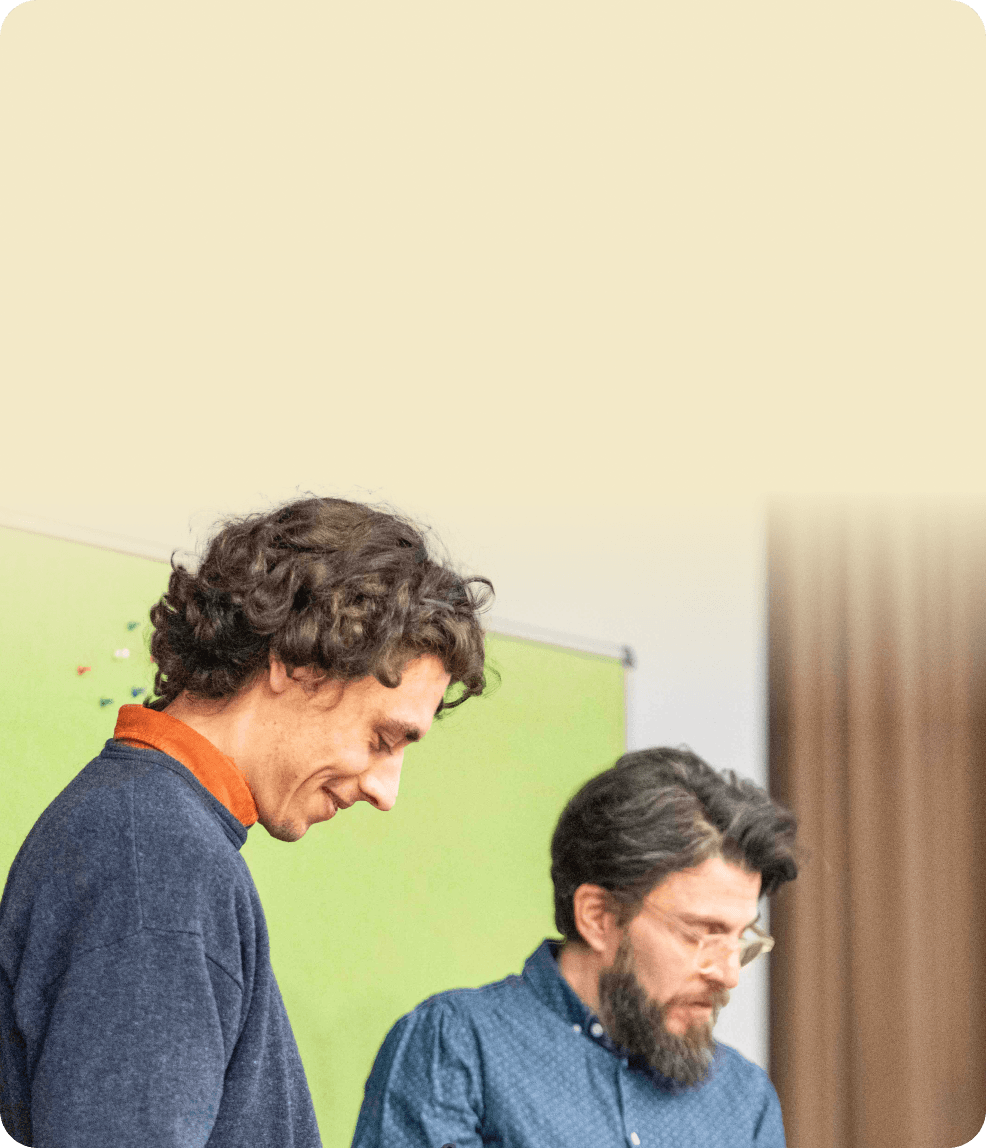
A proven model for illustrating these connections is the well-known Star Model by organizational researcher Jay Galbraith. It describes five dimensions that must interlock for an organization to function:

1. Strategy
It defines the long-term direction and the actual purpose of the organization.

2. Structure
It determines how power, responsibility and decision-making authority are distributed in the company.

3. Processes
They determine the flow of information and the way people work together across departmental boundaries.
4. Reward systems
They steer which behaviour is actually encouraged through bonuses, promotions or recognition.

5. People
They bring skills, values and individual motivations to their daily work.
Culture sits at the centre of these five dimensions. If even one dimension changes, the behaviour patterns of everyone involved shift automatically. Anyone who wants a collaborative culture must therefore break down silo structures and reward team performance. Only by deliberately adjusting these rules of the game is there room for new values to be lived.
How corporate culture makes itself felt
Culture can be felt and observed in everyday work at any time. A healthy culture is characterized by psychological safety, mutual trust and an open approach to mistakes. In practice, however, we often come across unconscious patterns that slow organizations down. Our CPC Culture Check uncovers exactly these hidden behaviours.
Four typical patterns show particularly clearly where corporate culture gets stuck in everyday work:
Such patterns are rarely a sign of misconduct by individuals. They have often developed over a long time and are kept in place by existing conditions.
The first step in cultural development is therefore to recognize such patterns and understand their causes before concrete changes begin.
Why corporate culture is a hard economic factor
For a long time, corporate culture was seen mainly as a matter of collaboration and the working environment. Today it is becoming increasingly clear how much it matters for an organization's performance and ability to change. Organizations with a strong performance culture create good conditions for lasting collaboration, growth and performance.
In phases of change and development in particular, culture decides between gain and loss:

Post-merger integration
After mergers, different ways of working and cultures meet. A shared cultural basis is then the prerequisite for successful collaboration.

Digital & AI transformation
Modern tools deliver their benefits above all when employees understand new technologies, accept them and integrate them into the way they work.

Skills shortage & staff turnover
An appreciative leadership culture and good collaboration retain employees for the long term and create attractive working conditions.

Generational change
The transition succeeds when experienced teams and new generations bring in their different perspectives and foster mutual appreciation.
A values-based culture noticeably lowers staff turnover and shortens the time it takes new specialists to settle in. Innovative strength also grows, because employees bring in ideas boldly and see mistakes as chances to learn. Culture work thus protects your investments and strengthens your future viability in a dynamic competitive environment.
Using culture as a success factor
Whether post-merger, AI transformation or generational change: in 30–45 minutes, a culture expert will give you an initial assessment of your situation and the next steps. Free of charge and confidential.
Actively changing corporate culture: the path to cultural development
Many managers ask themselves: can a culture that has grown over time be changed deliberately at all? The clear answer is: yes. Cultural development is a continuous process that takes time, orientation and consistent implementation. This is where the decisive difference between two terms lies:
Corporate culture
Corporate culture describes the current state of your organization.
Cultural development
Cultural development, on the other hand, is the active, structured process of developing this culture so that it is fit for the future.
CPC AG supports this path with a proven three-stage approach:
1. Thinking Culture
We develop a shared, motivating change story.
1. Thinking Culture
In the Clarity Check we work out the following with selected leaders:
- Strategic picture
- Reason and goal of the change
- Initiatives already underway
- Vision and guiding principles
2. Analyzing Culture
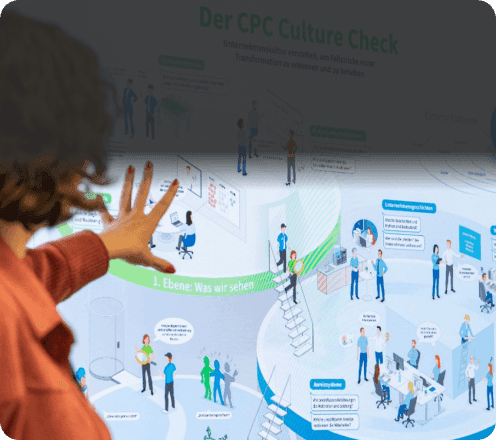
Our CPC Culture Check makes lived values and hidden basic assumptions transparent.
2. Analyzing Culture
Together with diverse groups of leaders and employees, we make the culture visible (Culture Check):
- Visible culture
- Non-visible culture
- Basic assumptions
- Externally acting factors

3. Working on Culture
We try out new behaviours through agile micro changes directly in everyday work.
3. Working on Culture
Together with the relevant leaders and organizational units, we implement cultural change in the company while keeping the following in mind:
- Starting points
- Framework conditions
- Preparatory tasks
Cultural development comes about through continuous learning, concrete experience and small steps in real working life. Would you like to take this path together with us?
Ready for the next step?
In a free initial consultation, we outline what cultural development could look like in your company – with the approach, phases and an initial framework for duration and costs.
Shaping a future-proof corporate culture with CPC
Corporate culture is best looked at together with the organization. That is exactly why CPC combines cultural development with change management, transformation and organizational consulting.
For many years, CPC has supported companies in situations of change, bringing methodological expertise together with practical project experience. This experience is particularly relevant when culture is to be developed in connection with concrete changes.

Understanding culture instead of prescribing it
CPC starts with a differentiated view of the organization. The focus is on which cultural patterns are actually at work and which development opportunities arise from them.

Connecting culture with the organization
Cultural patterns always emerge in interplay with structures and processes. That is why CPC looks at culture, structures, processes and behaviour together.

Putting change into practice
CPC sees cultural development as an iterative process in which new approaches are tried out and developed further based on concrete experience.

Change expertise meets cultural development
A particular strength of CPC lies in combining cultural development and change management. Change is looked at from different perspectives and connected in a targeted way.
Shaping a future-proof corporate culture with CPC AG
Corporate culture is the adaptable foundation of your long-term success. Would you like to uncover hidden dynamics in your organization and anchor values noticeably in everyday work? CPC AG supports you with proven methods and deep psychological expertise.


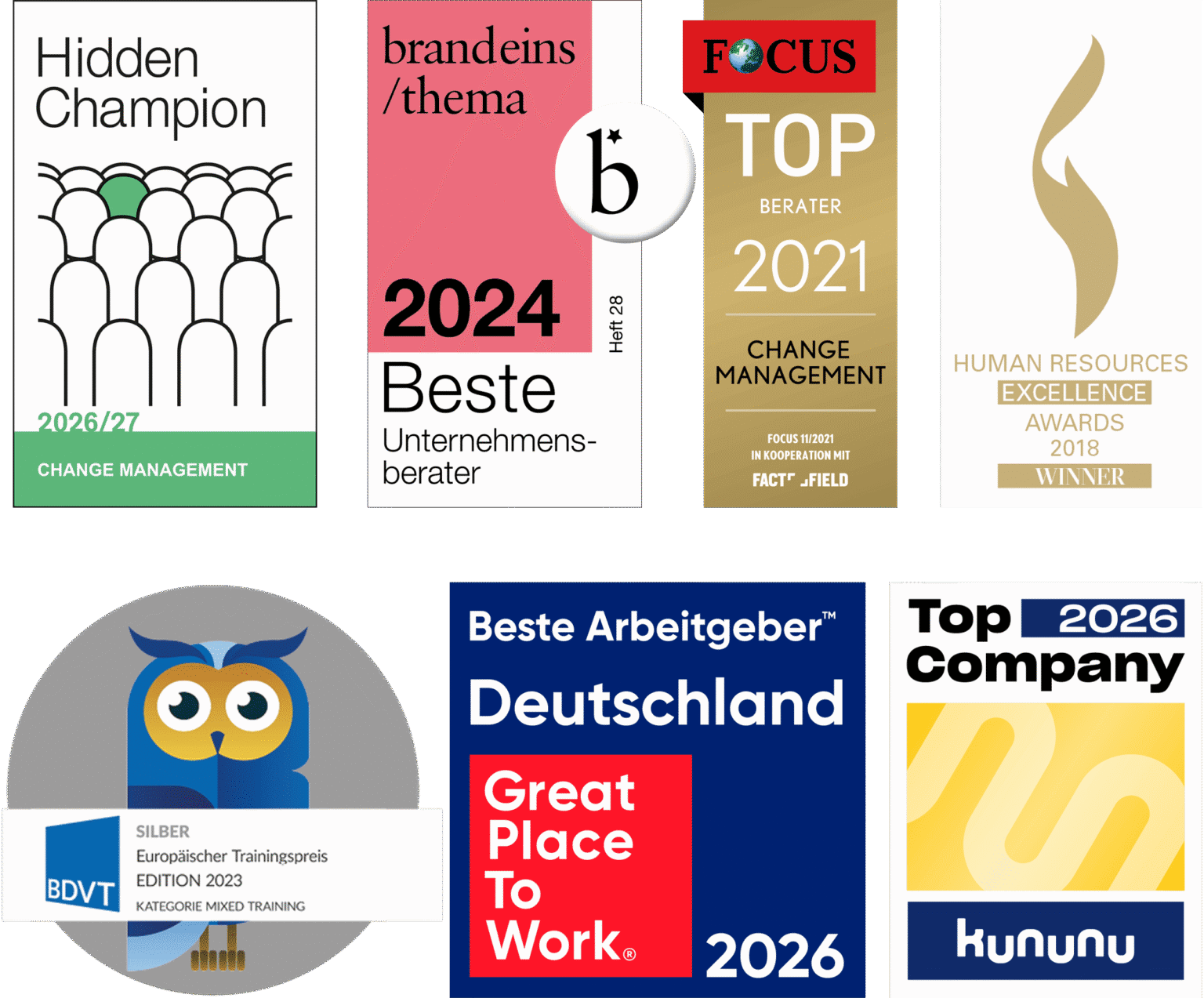
We're grateful for these awards
- CPC is a five-time No. 1 Hidden Champion for change management
- Year after year, brandeins/thema names us Germany's best management consultancy for change management
- We have been a Focus Top Consultant for many years
- Winner of the HR Excellence Award and the European Training Prize together with Deutsche Telekom and Lufthansa Technik
- We are No. 1 Great Place to Work in the 51–100 employees category and a Kununu Top Company.


Let's discuss
your project with us!
Tell us about your project. In a 30 to 45-minute initial conversation we show you how your change can succeed and what it takes. Afterwards you decide, in your own time, how to proceed.

Step 1
Call back or email.
We get back to you within 24 hours, clarify what you need and arrange an appointment.
Step 2
Free initial conversation.
In a video call you describe your project. Together we discuss suitable solution scenarios.
Step 3
The next steps.
Proposal, pitch or project kickoff? You set the pace and decide how to proceed.
Frequently asked questions about corporate culture
Corporate culture describes the current state of all lived values, thought patterns and unconscious basic assumptions in an organization. It is the company's existing operating system. Cultural development, on the other hand, is the active, methodical process of change. It transforms ingrained habits in a targeted way through changed conditions and iterative steps in everyday work. While culture is the phenomenon, cultural development is the management discipline for developing that culture so it is fit for the future.
New values on posters or in mission statements only touch the conscious level of communication. Employees' actual behaviour, however, follows unconscious basic assumptions and existing reward systems. Anyone who calls for collaboration but rewards only individual performance creates a paralysing sense of dissonance in the team. Culture only changes when managers live the new values and adapt organizational structures. Only changed rules of the game in everyday work lead to new habits.
A toxic culture destroys psychological safety and holds back an organization's performance. It leads to high staff turnover as high performers leave the company. Innovative strength also declines because employees take no risks for fear of making mistakes. Conflicts remain unresolved and operational rush crowds out strategic goals. This weakens competitiveness for the long term and causes high costs for recruitment and friction in day-to-day business.
Corporate culture can be examined systematically and made visible from different perspectives, even if a single key figure falls short. The CPC Culture Check looks at visible and less visible elements of culture as well as the underlying basic assumptions, among other things. Depending on the question, further qualitative or quantitative observations are added. This results in a differentiated picture of the existing culture and its relevant patterns.
Primary responsibility for corporate culture lies with senior management and managers. They act as culture architects, since their actions define the framework for the entire workforce. The HR department supports this process methodically but can hardly bring about cultural change on its own. Only when managers actively live the new values in everyday work does the initiative gain credibility. Culture is therefore an indivisible leadership task at every level of the hierarchy.